Author: Venk@
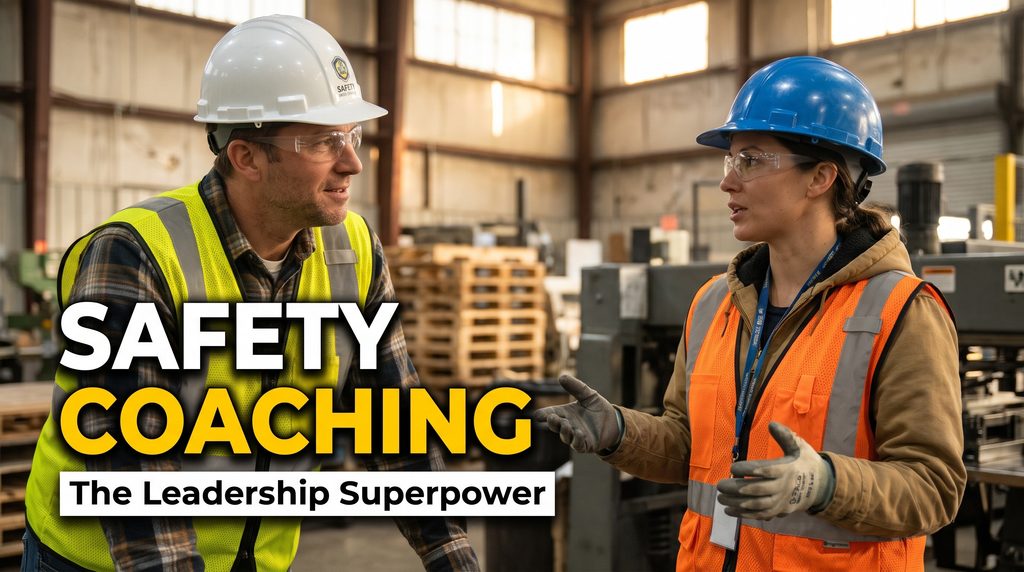
Picture this: You are walking through the warehouse or job site, clipboard in hand, and a supervisor flags you down.
“Hey, the forklift aisle is congested, and the crew wants to stack pallets near the fire exit. Can we do that just for today?”
If you are like most safety pros, your instinct kicks in: you put on your superhero cape, quote the compliance standard, and tell them exactly what to do. You feel valuable, but an hour later another line lead calls you to ask what gloves to pick for a standard chemical wash.
By 3:00 PM, you realize you have spent the entire day acting as a human bottleneck, approving basic decisions because everyone waits for you to say yes or no. You are exhausted, overworked, and essentially training your team to turn off their brains.
It’s time to trade that cape for something much more durable: Safety Coaching.
What Safety Coaching Is (and Isn’t)
When people hear “coaching,” they often think of a whistle-blowing football coach or HR jargon for corrective discipline. Safety coaching is neither.
Safety coaching is the deliberate practice of active listening and strategic questioning. It’s not about giving answers; it’s about unlocking the other person’s critical thinking so they reach safe, sound conclusions on their own.
To be a great safety coach, you have to do the hardest thing imaginable for a safety professional: shut up, fight the urge to fix, and stop giving advice.
Coaching vs. Mentoring: Know the Difference
Both coaching and mentoring have value, but they solve different problems:
Safety Mentoring (The Advisor): A mentor draws on past industry battle scars to advise, guide, and share resources. Mentoring says: “Here’s how we handled that chemical spill five years ago; here is the template you should follow.”
- Safety Coaching (The Catalyst): A coach doesn’t hand out solutions. Coaching says: “What potential hazards do you see if we stack those pallets there? What alternatives have you considered?”
Mentoring teaches people what you know; coaching empowers people to use what they know.
The Three Levels of Listening
Before you can coach, you must audit how you actually hear people. Most of us fall into one of three buckets:
- Internal Listening (Waiting to Talk): You hear the team member speaking, but your internal dialogue is screaming. You are mentally rehearsing your reply, waiting for them to pause so you can offer your opinion or quote the safety manual.
- Focused Listening (Connecting to the Speaker): You give full eye contact and pick up on emotional cues. You mirror back what they say and offer thoughtful feedback without immediately jumping to dictate the next step.
- Global Listening (The Big Picture): You listen not just to the words, but to the silence, body language, and workplace context. You notice when a supervisor’s hesitation isn’t about a procedure, but about pressure from production targets. You silence your own ego completely to make room for their perspective.
The Magic Three-Word Question
Ready to start? The next time an employee brings you a problem they have the technical baseline to solve, resist the reflex to hand down a ruling.
Listen globally, pause, and ask:
“And what else?”
When people are conditioned to be directed, they hold back their ideas. Asking “And what else?” gives them the psychological safety to keep thinking aloud. Follow it up with: “What do you think our safest move is here?”
Suddenly, you aren’t just solving a momentary hazard—you are building a safety leader.
Breaking the cycle of dependency doesn’t happen overnight, but every time you replace an order with a question, you build a safer, more resilient organization.
What’s the most frequent question your team comes to you with that they could actually answer themselves?
Contact info@ravenllp.com for a partership to enhance your organization’s safety culture.